Morocco · blue nila
Nila is the Moroccan name for indigo, the colour that comes from the leaf of Indigofera tinctoria. In Morocco it is sold at the herbalist, in a paper bag, next to ghassoul and black soap. The whole story of that colour, how old it is and how it is made, is in blue nila.
What 59 KM gets you
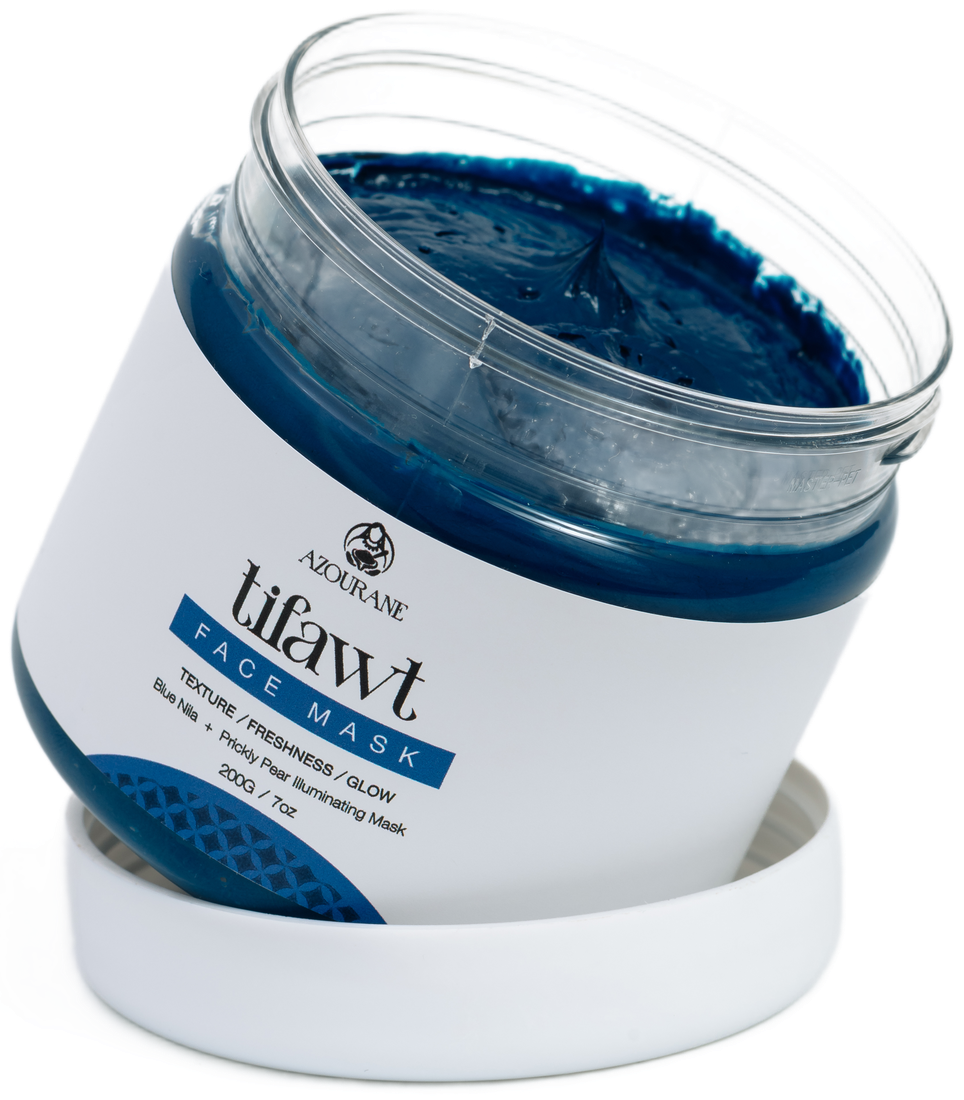
A 200 g jar. You run your fingertips across the surface, pick up a little and spread a thin layer over the face. A thin layer is enough for one application, and the mask is used once or twice a week, so 200 g lasts months.
TIFAWT face mask. Blue nila, prickly pear seed oil, kaolin, sweet almond oil, glycerin, vitamin E.
Size: 200 g. pH: 5.5 to 6.0. Price: 59 KM.
The full INCI declaration is on the mask page and in the INCI guide.
How to use it
- Spread a thin layer over clean skin and avoid the eye area.
- Leave it on for ten to fifteen minutes.
- Rinse with lukewarm water and pat dry.
Once or twice a week. External use only.
Where to get it
Online, on the product page. Or in person at our shop in Sarajevo, Sarajevo City Center, third floor, where you can open it and smell it before you take it.
Questions
How much does blue nila cost in Bosnia?
The TIFAWT mask with blue nila costs 59 KM for a 200 g jar.
Where can I buy blue nila in Bosnia?
Online on our product page, or in person at our shop in Sarajevo, Sarajevo City Center, third floor. We ship across Bosnia and Herzegovina from Sarajevo in 1 to 2 working days.
How long does a 200 g jar last?
One application takes a thin layer, and the mask is used once or twice a week, so 200 g lasts months.
Do I have to mix the nila myself?
No. TIFAWT is a finished mask in a 200 g jar, ready to apply straight from the pot.
Can I see it before I buy?
Yes. At Sarajevo City Center, third floor, you can open it and smell it before you take it.
The mask itself, the full ingredient list and who it is for are on the blue nila face mask page. The story of the colour is in blue nila. The other Moroccan colour from the same tradition is aker fassi.