You pick up a face cream, turn the bottle around and find the ingredient list. The front sounded straightforward. The back says Xylitylglucoside.
I understand the appeal of simply asking for “the best face cream”. But a few unfamiliar words, properly explained, can make the choice much easier. You can understand what you are buying, why a particular texture suits you and what you want your skin to feel like after applying it.
Start with what you want the cream to do
“For dry skin” is a useful starting point. Try taking it a little further. Do you want your cheeks to feel softer under your fingertips? More comfortable after washing? Or are you looking for a light texture that you enjoy using every morning?
Your answer helps narrow the choice. Creams are generally thicker and contain more oil than lotions and gels. The American Academy of Dermatology recommends a cream as a starting point for dry skin, while a lighter lotion or gel may suit someone with oilier skin. These are useful guidelines; you still need to get to know the particular formula. Their selection guide explains these differences.
When comparing two creams, consider the rest of your morning. If sunscreen and make-up come afterwards, you want to know how the cream feels beneath the products you already use. Try it in that sequence. The answer will then relate to your own routine.
Why a cream contains both water and oil
Oil and water separate when simply mixed together. In a cream, emulsifiers bring them into an even mixture called an emulsion. One pump can therefore contain a water phase, oils and ingredients that help the skin retain moisture. DermNet explains the differences between these formulations.
A bottle of pure oil provides oil-based care: it softens the skin and leaves a layer that can help slow moisture loss. A cream allows water-binding ingredients to join that care. When deciding between a cream and a facial oil, consider whether you want this combination in one product or enjoy applying a few drops of oil separately.
Reading the ingredients without learning a dictionary
Start with a few of the jobs ingredients do. A formula usually combines several, and an individual ingredient can have more than one role.
- Binding moisture. Glycerin belongs to a group called humectants. They attract and retain water in the skin's outer layer.
- Softening. Emollients smooth and soften the skin's surface. Many oils and butters belong here, familiar through the way they feel when applied.
- Holding moisture in. Ingredients that leave a protective layer on the surface slow water loss. Their proportions and the way they are combined with other ingredients help shape the richness of the texture.
DermNet's overview of moisturisers explains these roles in more detail. Once you understand them, you can look for how they come together in the cream you are considering.
How this works in AFOULKI
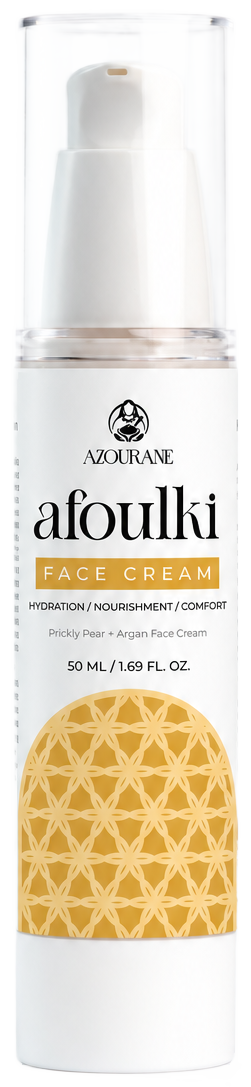
Our AFOULKI face cream combines prickly pear seed oil and argan oil with shea butter to soften dry skin. Glycerin and AQUAXYL® help the skin retain moisture. The formula brings Moroccan oils together with ingredients that bind water.
And the Xylitylglucoside from the beginning? On AFOULKI's ingredient list, it appears alongside Anhydroxylitol and Xylitol. Together they make up AQUAXYL, a sugar-derived complex. Those three words now have a job you can recognise.
AFOULKI is a daily cream with no added fragrance. Gently massage one pump into clean, dry skin after cleansing. The bottle contains 50 ml, and the product page carries the complete ingredient list. You can use this example when reading another cream, too: identify an ingredient, understand its role, then look at what accompanies it.
What one test application can tell you
Apply a little cream to a clean hand. Notice how easily it spreads. Give it time to absorb, then run your fingertips over the skin. How does the finish feel? How much shine remains? Do you like the scent, if there is one?
This helps you get to know the texture. How it suits your everyday facial care becomes clearer through use. Keeping the rest of your familiar routine steady can help you notice what the new cream contributes.
If you are in Sarajevo, you can try AFOULKI at our shop on the third floor of SCC. Bring the name of a cream you already enjoy. It is easier to talk about texture when we know what has worked for you.
The next time you turn a bottle around, find one ingredient you now understand. You already have a better place to begin.