Moroccan tradition · indigo

Blue nila

Nila is the Moroccan name for indigo, a blue powder ground from the leaves of Indigofera tinctoria. Moroccan herb shops sell it by the bag, and at home it is mixed with water into a face mask. The same plant has been dyeing cloth for centuries.

What nila is

Indigo does not come from a flower. It comes from a leaf, fermented, dried and milled, and only then does it give the deep blue it is known for. In Morocco that powder is called nila, and it sits on the shelf next to henna, ghassoul and black soap.

On skin it is used as an occasional mask: the powder is mixed with water or rose water into a thick paste, left briefly and rinsed off. The tradition belongs to the hammam and to the days before a celebration, when skin is meant to look rested.

One thing worth knowing before you buy

Blue powder sold as nila is not always plant indigo. In souks and online, the same name often covers a synthetic blue pigment, because it is cheaper and gives a stronger, more even color. Smell and price give it away first: real indigo powder is earthy, and it is never the brightest blue on the table.

Which makes the weakest possible test for nila the one everybody reaches for first: how blue is it. Color on skin is pigment, and pigment is not care. What your skin feels after a mask comes from the oils and the clay in the formula, not from the shade.

Where nila sits in the TIFAWT mask

In our TIFAWT mask nila is genuinely in the formula, as Indigofera tinctoria leaf powder. It sits thirteenth on the ingredient list, so a small part of the formula.

Where the blue actually comes from

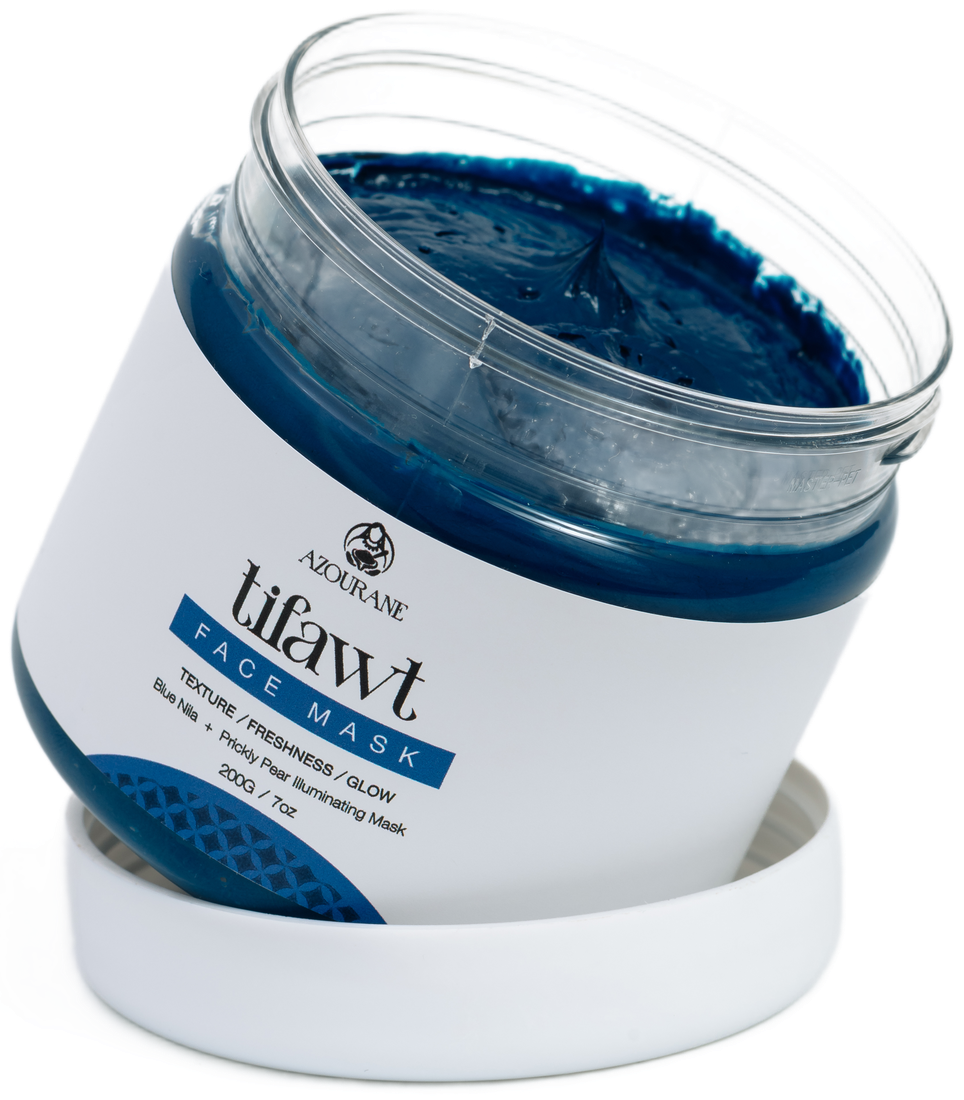
The blue of the TIFAWT mask comes from CI 77510, a synthetic pigment, third on the ingredient list. Nila is in the formula as the ingredient the tradition is built on, but it is not what colors the mask. The color is color. The oils and the clay do the work.

What is actually doing the work

Prickly pear seed oil, kaolin clay, sweet almond oil, glycerin and vitamin E. The prickly pear brings moisture, the kaolin lifts oil from the surface, and the almond oil and glycerin keep the mask soft while it sits. The pH is between 5.5 and 6.0.

It arrives ready, in a 200 g tube. Nothing to measure, nothing to mix, and no rush to rinse before it tightens, because it does not tighten. The mask is fragranced.

  1. Spread an even layer on clean, dry skin and stay clear of the eye area.
  2. Leave it for 10 to 15 minutes.
  3. Rinse with lukewarm water and pat dry.
  4. Follow straight away with an oil or serum to hold the moisture in.

Once or twice a week is enough. Evenings work best.

See TIFAWT, 59 KM Shipped from Sarajevo in 1 to 2 working days. Cash on delivery, free delivery from 59 KM, within Bosnia and Herzegovina.

Questions

Does nila give the TIFAWT mask its blue?

No. The blue comes from CI 77510, a synthetic pigment, third on the ingredient list. Nila, the leaf powder of Indigofera tinctoria, is in the formula, but it is thirteenth on the list and it is not the colorant.

Does nila lighten the skin?

No. Nila is not a skin-lightening agent. In the tradition it is used as an occasional mask before a celebration, and in our formula the moisture and softness come from prickly pear oil, almond oil and glycerin.

How do I recognize real nila powder?

By the smell and the color of the powder, not by the color on your skin. Plant indigo is earthy and a dark blue gray, while a synthetic pigment is clean, strong and uniform. If the powder is strikingly bright and cheap, it is probably not plant indigo.

What else is in the TIFAWT mask?

Prickly pear seed oil, kaolin clay, sweet almond oil, glycerin and vitamin E, in a water base, with CI 77510 as the pigment. The pH is between 5.5 and 6.0. The mask is fragranced. The full declaration is on the product page.

Who is the mask for?

For skin that looks tired and uneven, whatever the type. Prickly pear adds moisture for dry skin, kaolin lifts oil from combination skin. Avoid broken skin and active inflammation.

Do I have to mix the nila myself?

Not with ours. TIFAWT comes ready in a 200 g tube, so there is no powder to measure and no paste to mix. Loose nila powder is mixed with water or rose water into a thick paste.

More on the mask itself and on tired-looking skin is on the blue nila mask page and in the guide to nila and prickly pear. The other Moroccan color from the same tradition is aker fassi, and the rest of the ingredients are on the ingredients page.